
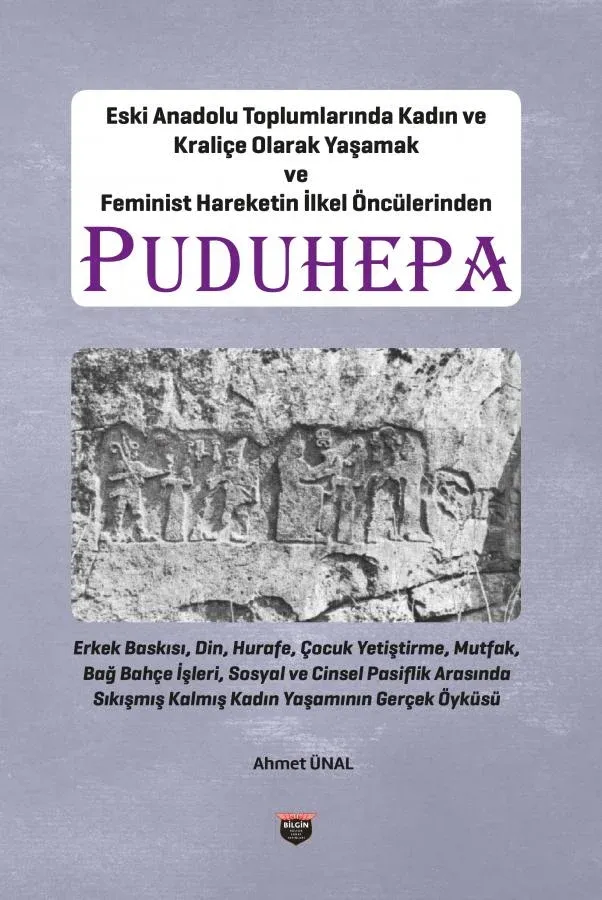

Puduhepa - Living as a Woman and a Queen in Ancient Anatolian Societies and One of the Primitive Pioneers of the Feminist Movement - The Life of a Woman Stuck Between Male Oppression, Religion, Superstition, Child Rearing, Kitchen, Gardening, Social and S Puduhepa - Eski Anadolu Toplumlarında Kadın ve Kraliçe Olarak Yaşamak ve Feminist Hareketin İlkel Öncülerinden - Erkek Baskısı, Din, Hurafe, Çocuk Yetiştirme, Mutfak, Bağ Bahçe İşleri, Sosyal ve Cinsel Pasiflik Arasında Sıkışmış Kalmış Kadın Yaşamının Ge
Following the Battle of Kadeš (1273 BC), Puduhepa married Hattušili III, a prince who ruled as a prince, governor, or petty king over the remaining portion of the Hittite state in Central Anatolia, which was then de facto divided into two. She served as queen dowager in Hakmiš and Hattuša, then known as "Silvertown," for approximately 40 years (1273-1233) during the reigns of both her husband and his stepson, Tudkhaliya IV, who succeeded her. A Hurrian woman of noteworthy matrilineal devotion, she served as queen dowager in both Hakmiš and Hattuša, then known as "Silvertown." Her hometown, Lawazantiya, was within the Hurrian realm. Her father, Pentipšarri, was a common priest there, serving in the service of the goddess IŠTAR. Matrilineal devotion was a characteristic of the Hurrians. Consequently, Puduhepa's marriage inevitably escalated into a "cultural clash," sometimes extending beyond the palace. It certainly wasn't easy to impose her own views and actions, which seemed strange to many in the foreign and conservative country she had gone to as a bride. However, the reforms she had so diligently and enthusiastically implemented, the innovations she had introduced in state administration, social structure, and religion, had never been even heard of until then. Of course, to gain acceptance, she had to simultaneously seek refuge in her husband's authority while simultaneously overthrowing it. Although the Hittites had already been somewhat weakened by the influence of Hurrian and indigenous Hattian cultures, they still stubbornly and uncompromisingly clung to their Indo-European genetic traits and habits. In Hatti, she employed a method she had invented herself to overthrow her husband's authority. She made Hattusili, a man plagued and afflicted since childhood, a complete hypochondriac. Thus, she was able to virtually take him under her tutelage. Only then did she pursue great projects that would rank among the first in history. Even when viewed from the perspective of the state women have reached, or rather, fallen to, today, the fact that such a woman lived 3,250 years ago in the heart of Anatolia is instructive, and there are many lessons to be learned. However, even if she was not the "first feminist" of the world or Anatolia, as the Pan-Anatolians desired, and even if her actions and thought products had no impact on later periods, she was a star who burned like a star when evaluated within the context of her own time and circumstances.
The book, written as a prelude to all known aspects, aims to understand the life of ancient Anatolian women and Puduhepa, to explain and recount the events. Another task is to correct the misinformation that has surfaced within Turkish society, which, for reasons explained in the book, has developed a keen interest in Puduhepa and almost desires to declare her the "Anatolian Cleopatra." During the writing of this work, all available documents and information were meticulously compiled, researched, and evaluated from the perspectives of philology, archaeology, and history. Most importantly, they were used after undergoing source criticism, one of the most fundamental principles of historiography. Views on Puduhepa in modern literature have been subjected to a similar critical filter. Efforts to investigate and illuminate not only the events that concern her but also all the events and formations surrounding her, including her geography, have enabled us to revitalize this historical figure who lived so long ago, to give her real flesh and blood, and to share the resulting findings with the reader. Otherwise, Puduhepa cannot be considered in isolation within the historical development; she is one link in a long chain. In this respect, the development of women and womanhood, from prehistoric times to her time, is also included in the detailed overview, thus situating Puduhepa within a broader and more explicit historical framework.
Puduhepa, Kadeš savaşını takiben (MÖ 1273) o zamanlar de facto ikiye bölünmüş olan Hitit devletinin Orta Anadolu’da kalan kısmına prens, vali veya küçük kral olarak hükmeden prens III. Hattušili ile evlendikten sonra, hem kocasının, hem de onun yerine geçen üvey oğlu kral IV. Tuthaliya’nın saltanatları boyunca yaklaşık 40 yıl süreyle (1273-1233) Hakmiš ve o zamanlar “Gümüşkent” de denen Hattuša’da ana kraliçelik yapmış, aşırıya kaçan anayanlılığıyla dikkat çeken Huri kökenli bir kadındır. Memleketi Lawazantiya Hurri ülkesi toprakları içindeydi. Babası Pentipšarri, orada Tanrıça IŠTAR’ın hizmetinde çalışan sıradan bir din görevlisiydi. Hurrilerin özellikleri anayanlı olmalarydı. Dolayısıyla Puduhepa’nın evliliği ister istemez boyutları zaman zaman saray dışına kadar taşan bir “kültür çatışması”na da dönüşüyordu. Gelin olarak gittiği o yabancı ve
tutucu ülkede hem kendisini hem de birçok kimseye acayip gelen düşünce ve eylemlerini kabul ettirmesi elbette hiç kolay olmamıştır, ama büyük bir gayret ve hevesle yürüttüğü reformların, devlet idaresinde, toplum yapısında veya dinde getirdiği yeniliklerin uygulanması bir tarafa, o ana dek adı bile duyulmamıştı. Elbette kendisini kabul ettirebilmesi için bir yandan kocasının otoritesine sığınırken diğer andan onu yıkması gerekiyordu. Hititler şimdiye dek her ne kadar Hurri ve yerli Hatti kültürlerinin etkisiyle bir nebze törpülenmiş olsalar da, Hint-Avrupa kökenli genetik huy ve alışkanlıklarında inatla ve tavizsizce direniyorlardı. Hatti’de kocasının otoritesini yıkarken kendi bulduğu bir yöntem kullandı.Ta çocukluğundan beri çorlu ve marazlı birisi olan Hattušili’yi düpedüz bir hypochondriac (hastalık kuruntusu) yaptı. Böylece onu neredeyse vesayeti altına alabilmişti. Ancak bundan sonra tarihte ilkler arasına girecek büyük işler peşine düştü. Günümüzde kadının ulaştığı, daha doğrusu düştüğü durum açısından bile bakıldığında bundan 3250 sene önce Anadolu’nun tam ortasındaki topraklarda böyle bir kadının yaşamış olduğunu görmek, ibret vericidir ve öğrenilecek dersler pek fazladır. Ama Pan-Anatolistlerin arzu ettikleri gibi o dünyanın veya Anadolu’nun “ilk feminist”i olmasa, eylemleri ve düşünce ürünleri sonraki dönemlere hiçbir etki yapmamış olsa bile, bir yıldız gibi yanıp sönmüş birisi olarak kendi yaşadığı dönem ve şartlar içerisinde değerlendirildiğinde, sıra dışı şahsiyetler arasında yer alır.
Kitap, bilinen tüm yönleriyle bir prelüt olarak Eski Anadolu kadını ve Puduhepa’nın hayatını anlamak, olayları açıklamak ve anlatmak için yazılmıştır. Bir başka ödevi de, kitabın içinde açıklanan nedenlerden ötürü Puduhepa’ya yakın ilgi duyan ve neredeyse onu “Anadolu Kleopatra’sı” ilân etmek isteyen Türk toplumunda kendisini gösteren yalan yanlış bilgileri düzeltmektir. Eser yazılırken, tüm mevcut belge ve bilgiler, filoloji, arkeoloji ve tarih açısından büyük bir titizlikle derlenmiş, araştırılmış, değerlendirilmiş ve en önemlisi tarih yazıcılığının en temel ilkelerinden birisi olan kaynak kritiğinden geçirildikten sonra kullanılmıştır. Modern literatürde Puduhepa ile ilgili görüşler de benzer tenkit süzgecinden geçirilmiştir. Sadece kendisini ilgilendiren olayları değil, coğrafyası dâhil onun etrafındaki tüm olay ve oluşumları araştırma ve aydınlatma çabaları, o kadar uzun yıllar önce yaşamış bu tarihî şahsiyeti canlandırmayı, ona gerçekten et, kan ve ruh vermeyi ve ortaya çıkan sonuçları okuyucuyla paylaşmayı sağlamıştır. Aksi halde Puduhepa tarihî gelişim içinde tek başına değerlendirilemez; o, uzun bir zincirin halkalarından biridir. Bu bakımdan kendisine gelinceye kadar ta prehistorik çağlardan başlayarak kadının ve kadınlığın gelişmesi de ayrıntılarıyla onceleme alanı içine sokulmuş, böylece Puduhepa daha geniş ve açık bir tarihi çerçevenin içine oturtulmuştur.
Following the Battle of Kadeš (1273 BC), Puduhepa married Hattušili III, a prince who ruled as a prince, governor, or petty king over the remaining portion of the Hittite state in Central Anatolia, which was then de facto divided into two. She served as queen dowager in Hakmiš and Hattuša, then known as "Silvertown," for approximately 40 years (1273-1233) during the reigns of both her husband and his stepson, Tudkhaliya IV, who succeeded her. A Hurrian woman of noteworthy matrilineal devotion, she served as queen dowager in both Hakmiš and Hattuša, then known as "Silvertown." Her hometown, Lawazantiya, was within the Hurrian realm. Her father, Pentipšarri, was a common priest there, serving in the service of the goddess IŠTAR. Matrilineal devotion was a characteristic of the Hurrians. Consequently, Puduhepa's marriage inevitably escalated into a "cultural clash," sometimes extending beyond the palace. It certainly wasn't easy to impose her own views and actions, which seemed strange to many in the foreign and conservative country she had gone to as a bride. However, the reforms she had so diligently and enthusiastically implemented, the innovations she had introduced in state administration, social structure, and religion, had never been even heard of until then. Of course, to gain acceptance, she had to simultaneously seek refuge in her husband's authority while simultaneously overthrowing it. Although the Hittites had already been somewhat weakened by the influence of Hurrian and indigenous Hattian cultures, they still stubbornly and uncompromisingly clung to their Indo-European genetic traits and habits. In Hatti, she employed a method she had invented herself to overthrow her husband's authority. She made Hattusili, a man plagued and afflicted since childhood, a complete hypochondriac. Thus, she was able to virtually take him under her tutelage. Only then did she pursue great projects that would rank among the first in history. Even when viewed from the perspective of the state women have reached, or rather, fallen to, today, the fact that such a woman lived 3,250 years ago in the heart of Anatolia is instructive, and there are many lessons to be learned. However, even if she was not the "first feminist" of the world or Anatolia, as the Pan-Anatolians desired, and even if her actions and thought products had no impact on later periods, she was a star who burned like a star when evaluated within the context of her own time and circumstances.
The book, written as a prelude to all known aspects, aims to understand the life of ancient Anatolian women and Puduhepa, to explain and recount the events. Another task is to correct the misinformation that has surfaced within Turkish society, which, for reasons explained in the book, has developed a keen interest in Puduhepa and almost desires to declare her the "Anatolian Cleopatra." During the writing of this work, all available documents and information were meticulously compiled, researched, and evaluated from the perspectives of philology, archaeology, and history. Most importantly, they were used after undergoing source criticism, one of the most fundamental principles of historiography. Views on Puduhepa in modern literature have been subjected to a similar critical filter. Efforts to investigate and illuminate not only the events that concern her but also all the events and formations surrounding her, including her geography, have enabled us to revitalize this historical figure who lived so long ago, to give her real flesh and blood, and to share the resulting findings with the reader. Otherwise, Puduhepa cannot be considered in isolation within the historical development; she is one link in a long chain. In this respect, the development of women and womanhood, from prehistoric times to her time, is also included in the detailed overview, thus situating Puduhepa within a broader and more explicit historical framework.
Puduhepa, Kadeš savaşını takiben (MÖ 1273) o zamanlar de facto ikiye bölünmüş olan Hitit devletinin Orta Anadolu’da kalan kısmına prens, vali veya küçük kral olarak hükmeden prens III. Hattušili ile evlendikten sonra, hem kocasının, hem de onun yerine geçen üvey oğlu kral IV. Tuthaliya’nın saltanatları boyunca yaklaşık 40 yıl süreyle (1273-1233) Hakmiš ve o zamanlar “Gümüşkent” de denen Hattuša’da ana kraliçelik yapmış, aşırıya kaçan anayanlılığıyla dikkat çeken Huri kökenli bir kadındır. Memleketi Lawazantiya Hurri ülkesi toprakları içindeydi. Babası Pentipšarri, orada Tanrıça IŠTAR’ın hizmetinde çalışan sıradan bir din görevlisiydi. Hurrilerin özellikleri anayanlı olmalarydı. Dolayısıyla Puduhepa’nın evliliği ister istemez boyutları zaman zaman saray dışına kadar taşan bir “kültür çatışması”na da dönüşüyordu. Gelin olarak gittiği o yabancı ve
tutucu ülkede hem kendisini hem de birçok kimseye acayip gelen düşünce ve eylemlerini kabul ettirmesi elbette hiç kolay olmamıştır, ama büyük bir gayret ve hevesle yürüttüğü reformların, devlet idaresinde, toplum yapısında veya dinde getirdiği yeniliklerin uygulanması bir tarafa, o ana dek adı bile duyulmamıştı. Elbette kendisini kabul ettirebilmesi için bir yandan kocasının otoritesine sığınırken diğer andan onu yıkması gerekiyordu. Hititler şimdiye dek her ne kadar Hurri ve yerli Hatti kültürlerinin etkisiyle bir nebze törpülenmiş olsalar da, Hint-Avrupa kökenli genetik huy ve alışkanlıklarında inatla ve tavizsizce direniyorlardı. Hatti’de kocasının otoritesini yıkarken kendi bulduğu bir yöntem kullandı.Ta çocukluğundan beri çorlu ve marazlı birisi olan Hattušili’yi düpedüz bir hypochondriac (hastalık kuruntusu) yaptı. Böylece onu neredeyse vesayeti altına alabilmişti. Ancak bundan sonra tarihte ilkler arasına girecek büyük işler peşine düştü. Günümüzde kadının ulaştığı, daha doğrusu düştüğü durum açısından bile bakıldığında bundan 3250 sene önce Anadolu’nun tam ortasındaki topraklarda böyle bir kadının yaşamış olduğunu görmek, ibret vericidir ve öğrenilecek dersler pek fazladır. Ama Pan-Anatolistlerin arzu ettikleri gibi o dünyanın veya Anadolu’nun “ilk feminist”i olmasa, eylemleri ve düşünce ürünleri sonraki dönemlere hiçbir etki yapmamış olsa bile, bir yıldız gibi yanıp sönmüş birisi olarak kendi yaşadığı dönem ve şartlar içerisinde değerlendirildiğinde, sıra dışı şahsiyetler arasında yer alır.
Kitap, bilinen tüm yönleriyle bir prelüt olarak Eski Anadolu kadını ve Puduhepa’nın hayatını anlamak, olayları açıklamak ve anlatmak için yazılmıştır. Bir başka ödevi de, kitabın içinde açıklanan nedenlerden ötürü Puduhepa’ya yakın ilgi duyan ve neredeyse onu “Anadolu Kleopatra’sı” ilân etmek isteyen Türk toplumunda kendisini gösteren yalan yanlış bilgileri düzeltmektir. Eser yazılırken, tüm mevcut belge ve bilgiler, filoloji, arkeoloji ve tarih açısından büyük bir titizlikle derlenmiş, araştırılmış, değerlendirilmiş ve en önemlisi tarih yazıcılığının en temel ilkelerinden birisi olan kaynak kritiğinden geçirildikten sonra kullanılmıştır. Modern literatürde Puduhepa ile ilgili görüşler de benzer tenkit süzgecinden geçirilmiştir. Sadece kendisini ilgilendiren olayları değil, coğrafyası dâhil onun etrafındaki tüm olay ve oluşumları araştırma ve aydınlatma çabaları, o kadar uzun yıllar önce yaşamış bu tarihî şahsiyeti canlandırmayı, ona gerçekten et, kan ve ruh vermeyi ve ortaya çıkan sonuçları okuyucuyla paylaşmayı sağlamıştır. Aksi halde Puduhepa tarihî gelişim içinde tek başına değerlendirilemez; o, uzun bir zincirin halkalarından biridir. Bu bakımdan kendisine gelinceye kadar ta prehistorik çağlardan başlayarak kadının ve kadınlığın gelişmesi de ayrıntılarıyla onceleme alanı içine sokulmuş, böylece Puduhepa daha geniş ve açık bir tarihi çerçevenin içine oturtulmuştur.