
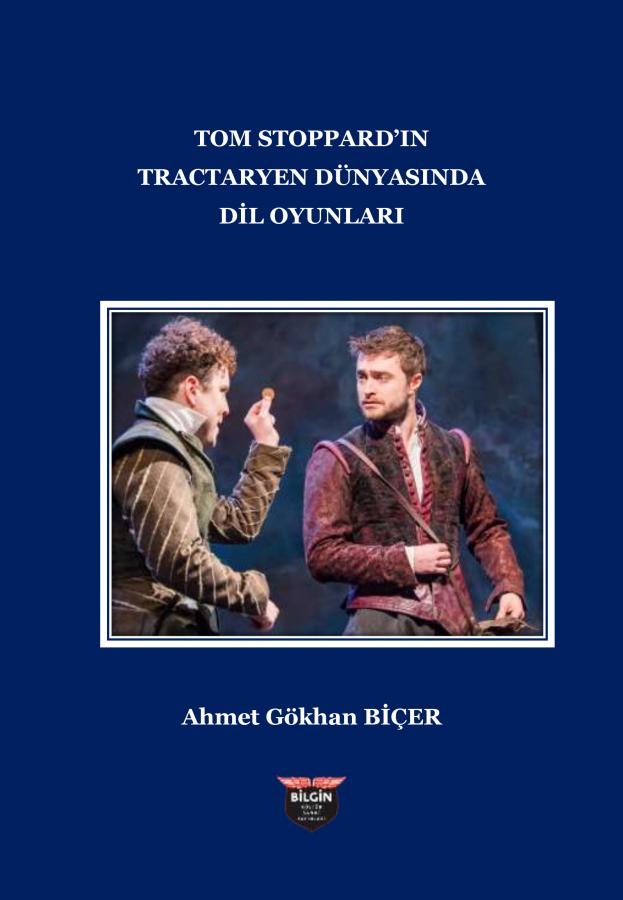

Language Games in the Tractarian World by Tom Stoppard TOM STOPPARD'IN TRACTARYEN DÜNYASINDA DİL OYUNLARI
Tom Stoppard and Ludwig Wittgenstein are among the greatest figures of their time, one in the field of theater and the other in philosophy. Wittgenstein, who profoundly shook the history of philosophy with two distinct approaches, is a difficult thinker, a fact he himself is aware of. He requested that the editor to whom he submitted the Tractatus add blank pages at the end of the book so that readers who might not understand what they read could express their feelings. Similarly, Stoppard was perceived as a difficult writer by audiences accustomed to the political plays of post-war English theater. This is due to the philosophical perspective underlying Stoppard's plays and his narrative technique, interwoven with language games. Wittgenstein, who focused on the relationship between philosophy and language throughout his life, clearly influenced Tom Stoppard. The criteria Wittgenstein established through the philosophy-philosopher-everyday language framework find their presence in Tom Stoppard's play within the context of playwright-author-everyday language. This situation results in the author reflecting a Tractarian world and frequently resorting to language games in his writing. The aim of this study is to attempt to delimit and not transcend the established boundaries, as Wittgenstein did in the Tractatus and Philosophical Investigations. The aim is to trace Wittgenstein's positioning in Tom Stoppard's play and to uncover the philosophical underpinnings of Rosencrantz and Guildenstern Are Dead, The Acrobats, Intentional Foul, Dogg's Hamlet, Cahoot's Macbeth, and The Real Thing. In this sense, the boundaries drawn are Wittgenstein's philosophy, his picture theory, and his theory of language games. In examining the plays, silence is preferred, as the point at which Wittgenstein's boundary is crossed becomes a context that should not be discussed.
Tom Stoppard ve Ludwig Wittgenstein, biri tiyatro alanında diğeri de felsefe alanında yaşadıkları çağın en büyük isimlerindendir. Felsefe tarihini birbirinden farklı iki yaklaşımla derinden sarsmış olan Wittgenstein anlaşılması güç bir düşünürdür; bu durumun kendisi de
farkındadır. Tractatus’u gönderdiği editörden, okuduklarını anlamayıp ona kızacak okurların duygularını ifade edebilmeleri için kitabın sonuna boş sayfalar eklemesini talep etmiştir. Benzer şekilde Stoppard da savaş sonrası İngiliz tiyatrosunun politik oyunlarını izlemeye alışmış seyirciler tarafından anlaşılması güç bir yazar olarak değerlendirilmiştir. Bunun nedeni, Stoppard’ın oyunlarının ardında yatan felsefi bakış ve dil oyunlarıyla örülmüş anlatım tekniğidir. Yaşamı boyunca felsefe ve dil arasındaki ilişkiye odaklanan Wittgenstein’ın, Tom Stoppard’ı etkilediği çok açıktır. Wittgenstein’ın, felsefe-filozof-gündelik dil dolayımında kurguladığı ölçütler, oyun-yazar-gündelik dil bağlamında Tom Stoppard tiyatrosunda varlık bulmakta ve bu durum, yazarın oyun metinlerini kaleme alırken Tractaryen bir dünyayı yansıtmasıyla ve dil oyunlarına sıklıkla başvurmasıyla sonuçlanmaktadır. Bu çalışmanın amacı, Wittgenstein’ın Tractatus’ta ve Felsefi Soruşturmalar’da yaptığı gibi bir sınırlandırma ve çizilen sınırı aş(ma)ma girişimidir. Amaç, Tom Stoppard tiyatrosuna konumlanan Wittgenstein izlerini sürüp Rosencrantz ve Guildenstern Öldüler, Akrobatlar, Kasti Faul, Dogg’un Hamlet’i, Cahoot’un Macbeth’i ve Gerçek Şey oyunlarının felsefi arka planını açığa çıkarmaktır. Bu anlamda çizilen sınır Wittgenstein felsefesi, onun resim teorisi ve dil oyunları kuramıdır. Oyunlar incelenirken Wittgenstein sınırını aşan noktada, üzerine konuşulmaması gereken bağlam olacağı için, susmak tercih edilmiştir
Tom Stoppard and Ludwig Wittgenstein are among the greatest figures of their time, one in the field of theater and the other in philosophy. Wittgenstein, who profoundly shook the history of philosophy with two distinct approaches, is a difficult thinker, a fact he himself is aware of. He requested that the editor to whom he submitted the Tractatus add blank pages at the end of the book so that readers who might not understand what they read could express their feelings. Similarly, Stoppard was perceived as a difficult writer by audiences accustomed to the political plays of post-war English theater. This is due to the philosophical perspective underlying Stoppard's plays and his narrative technique, interwoven with language games. Wittgenstein, who focused on the relationship between philosophy and language throughout his life, clearly influenced Tom Stoppard. The criteria Wittgenstein established through the philosophy-philosopher-everyday language framework find their presence in Tom Stoppard's play within the context of playwright-author-everyday language. This situation results in the author reflecting a Tractarian world and frequently resorting to language games in his writing. The aim of this study is to attempt to delimit and not transcend the established boundaries, as Wittgenstein did in the Tractatus and Philosophical Investigations. The aim is to trace Wittgenstein's positioning in Tom Stoppard's play and to uncover the philosophical underpinnings of Rosencrantz and Guildenstern Are Dead, The Acrobats, Intentional Foul, Dogg's Hamlet, Cahoot's Macbeth, and The Real Thing. In this sense, the boundaries drawn are Wittgenstein's philosophy, his picture theory, and his theory of language games. In examining the plays, silence is preferred, as the point at which Wittgenstein's boundary is crossed becomes a context that should not be discussed.
Tom Stoppard ve Ludwig Wittgenstein, biri tiyatro alanında diğeri de felsefe alanında yaşadıkları çağın en büyük isimlerindendir. Felsefe tarihini birbirinden farklı iki yaklaşımla derinden sarsmış olan Wittgenstein anlaşılması güç bir düşünürdür; bu durumun kendisi de
farkındadır. Tractatus’u gönderdiği editörden, okuduklarını anlamayıp ona kızacak okurların duygularını ifade edebilmeleri için kitabın sonuna boş sayfalar eklemesini talep etmiştir. Benzer şekilde Stoppard da savaş sonrası İngiliz tiyatrosunun politik oyunlarını izlemeye alışmış seyirciler tarafından anlaşılması güç bir yazar olarak değerlendirilmiştir. Bunun nedeni, Stoppard’ın oyunlarının ardında yatan felsefi bakış ve dil oyunlarıyla örülmüş anlatım tekniğidir. Yaşamı boyunca felsefe ve dil arasındaki ilişkiye odaklanan Wittgenstein’ın, Tom Stoppard’ı etkilediği çok açıktır. Wittgenstein’ın, felsefe-filozof-gündelik dil dolayımında kurguladığı ölçütler, oyun-yazar-gündelik dil bağlamında Tom Stoppard tiyatrosunda varlık bulmakta ve bu durum, yazarın oyun metinlerini kaleme alırken Tractaryen bir dünyayı yansıtmasıyla ve dil oyunlarına sıklıkla başvurmasıyla sonuçlanmaktadır. Bu çalışmanın amacı, Wittgenstein’ın Tractatus’ta ve Felsefi Soruşturmalar’da yaptığı gibi bir sınırlandırma ve çizilen sınırı aş(ma)ma girişimidir. Amaç, Tom Stoppard tiyatrosuna konumlanan Wittgenstein izlerini sürüp Rosencrantz ve Guildenstern Öldüler, Akrobatlar, Kasti Faul, Dogg’un Hamlet’i, Cahoot’un Macbeth’i ve Gerçek Şey oyunlarının felsefi arka planını açığa çıkarmaktır. Bu anlamda çizilen sınır Wittgenstein felsefesi, onun resim teorisi ve dil oyunları kuramıdır. Oyunlar incelenirken Wittgenstein sınırını aşan noktada, üzerine konuşulmaması gereken bağlam olacağı için, susmak tercih edilmiştir