
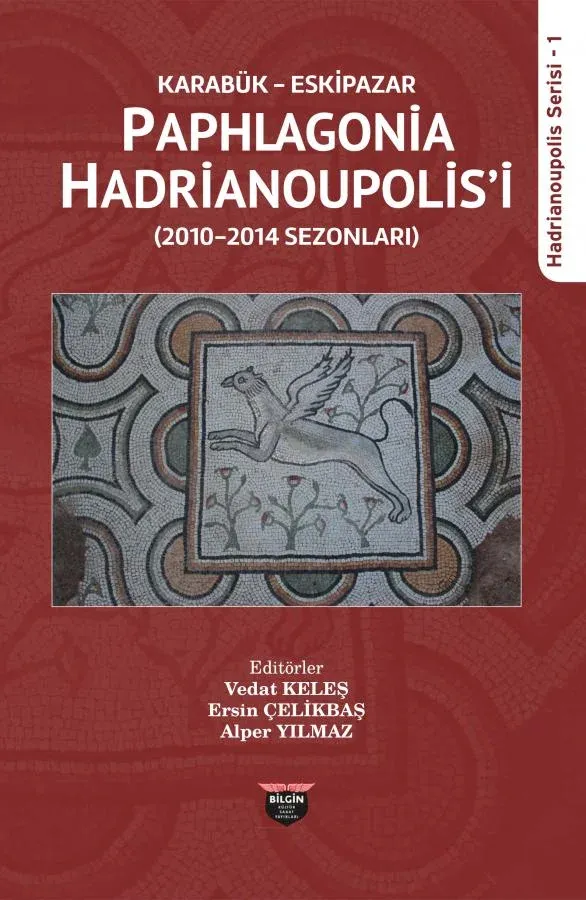

KARABÜK ESKİPAZAR PAPHLAGONIA HADRIANOUPOLİS 2010-2014 SEASONS KARABÜK ESKİPAZAR PAPHLAGONİA HADRİANOUPOLİS'İ 2010-2014 SEZONLARI
Edited by Assoc. Prof. Dr. Ersin ÇELİKBAŞ, Head of the Archaeology Department at Karabük University's Faculty of Letters, Prof. Dr. Vedat KELEŞ, Head of the Archaeology Department at Ondokuz Mayıs University's Faculty of Letters, and Res. Asst. Alper Yılmaz of the Archaeology Department at Ondokuz Mayıs University's Faculty of Letters, Hadrianoupolis Series 1: Paphlagonia Hadrianoupolis (2010-2014 Seasons), this book is of great importance to students of archaeology, history, and art history, as well as those interested in archaeology, as well as to the scientific community. It was published by Bilgin Culture and Art Publications in 2020.
The book consists of an introduction, ten book chapters based on data obtained from excavations at the ancient city of Hadrianoupolis, an acknowledgement section dedicated to those who participated in excavations in previous years, and a bibliography. In the preface, the authors outline the historical background of the Eskipazar district of Karabük Province, the research and excavations conducted there, and the purpose of the book, which is based on the data obtained from these studies. In the introduction (p. 1), they emphasize the inadequacy of scientific research and excavations in Black Sea archaeology and the significant role of the ancient city of Hadrianoupolis in illuminating the region's history.
The first section of the book (pp. 3-8) is titled "History and Localization." This section includes information about the location of the ancient city of Hadrianoupolis, its spread, territory, geographical features, historical place and importance, as well as the structures within the city. According to the authors, Hadrianoupolis is an important religious center for Christians. The second section of the book, "Hadrianoupolis Excavations and Scientific Studies in the City" (pp. 9-10), provides information on scientific research, publications, and restoration, conservation, and excavation work conducted in the ancient city from past to present. The authors present these studies chronologically.
The third section, "The Architecture of Hammam A and the Influence of Christianity on Bathing" (pp. 13-32), consists of eight sections. In this section, the authors provide detailed information about the sections, functions, construction phases, and period characteristics of Hammam A in the ancient city of Hadrianoupolis. The first section covers the bath's Vestibulum (hall); the second section, the Latrina (toilet); the third section, the Frigidarium (cold room); the fourth section, the Tepidarium (warm room); the fifth section, the Caldarium (hot room); the sixth section, the dating of the structure based on the obtained data; the seventh section, information on bathing and bath architecture in the Early Byzantine Period; and the eighth section, a general evaluation and conclusion of the structure. Various topics are also addressed, including the reflection of bathing traditions in architectural structures in the Roman world, the use of natural water resources, toilet and cleaning cultures, and the role of time spent in baths as a part of social life.
The fourth section, "Bamam B," comprises seven sections, each with a sequential overview and a conclusion (pp. 33-44). The author offers suggestions for the bath's possible sections, floor and wall heating systems, mosaics, bathing culture, and its possible appearance, based on architectural sculptures. According to the author, the bath consists of six sections. Furthermore, the fact that some of the hypocaust piers were formed from pipes, the presence of "spacer tubes" identified in the caldarium and tepidarium sections, and the mosaics and finds recovered during excavations indicate that the structure could be dated to the 6th-7th centuries AD.
The fifth chapter covers the topic of "Four Rivers Church (Church B)" (pp. 45-88). The author provides a wide range of information regarding the church's location, architecture, examination of the mosaics in terms of shape and subject matter, architectural sculptures and their dating based on similar examples, construction materials, mosaic depictions and decorative features from a Christian historical perspective. Upon detailed evaluation of the church, the author states that it was built in the 5th-6th centuries AD, had a three-nave basilical plan, and featured a projecting semicircular apse to the east and two rectangular narthexes to the west. The author also specifically notes that the naos, bema, and apse sections of the church are decorated with mosaics. The sixth section is titled "Chora Church (Church A)" (pp. 89-152). Specifically, the author describes the section as consisting of seventeen headings, with a basilical plan, three naves, a projecting semicircular apse, a rectangular narthex on the west, and a templon on three sides covering a rectangular area on the west of the apse.
Vedat KELEŞ
Hadrianoupolis Kazıları ve Kentteki Bilimsel Çalışmalar
Levent KESKİN - Sadık SULAN - Erdem TUNÇ
Hamam A’nın Mimarisi ve Hristiyanlık İnancının Yıkanma Üzerindeki Etkileri
Alper YILMAZ - Selman TAMYÜREK
Hamam B
Mevlüt ELİÜŞÜK
Dört Nehir Kilisesi (Kilise B)
Ercan VERİM
Chora Kilisesi (Kilise A)
Ercan VERİM
Yeni Veriler Işığında Geç Roma Konutu (Domus) Hakkında Değerlendirmeler
Ersin ÇELİKBAŞ - Sinan EKİNCİ
Eskiçağ ve Geç Antik Dönem Yazıtları Işığında Bir Paphlagonia Şehri:Hadrianoupolis
Mustafa H. SAYAR
2010-2014 Yılları Sikke Buluntuları
Kasım OYARÇİN
2010-2014 Yılları Restorasyon-Konservasyon Çalışmaları
Vedat KELEŞ - Ersin ÇELİKBAŞ - Alper YILMAZ
Edited by Assoc. Prof. Dr. Ersin ÇELİKBAŞ, Head of the Archaeology Department at Karabük University's Faculty of Letters, Prof. Dr. Vedat KELEŞ, Head of the Archaeology Department at Ondokuz Mayıs University's Faculty of Letters, and Res. Asst. Alper Yılmaz of the Archaeology Department at Ondokuz Mayıs University's Faculty of Letters, Hadrianoupolis Series 1: Paphlagonia Hadrianoupolis (2010-2014 Seasons), this book is of great importance to students of archaeology, history, and art history, as well as those interested in archaeology, as well as to the scientific community. It was published by Bilgin Culture and Art Publications in 2020.
The book consists of an introduction, ten book chapters based on data obtained from excavations at the ancient city of Hadrianoupolis, an acknowledgement section dedicated to those who participated in excavations in previous years, and a bibliography. In the preface, the authors outline the historical background of the Eskipazar district of Karabük Province, the research and excavations conducted there, and the purpose of the book, which is based on the data obtained from these studies. In the introduction (p. 1), they emphasize the inadequacy of scientific research and excavations in Black Sea archaeology and the significant role of the ancient city of Hadrianoupolis in illuminating the region's history.
The first section of the book (pp. 3-8) is titled "History and Localization." This section includes information about the location of the ancient city of Hadrianoupolis, its spread, territory, geographical features, historical place and importance, as well as the structures within the city. According to the authors, Hadrianoupolis is an important religious center for Christians. The second section of the book, "Hadrianoupolis Excavations and Scientific Studies in the City" (pp. 9-10), provides information on scientific research, publications, and restoration, conservation, and excavation work conducted in the ancient city from past to present. The authors present these studies chronologically.
The third section, "The Architecture of Hammam A and the Influence of Christianity on Bathing" (pp. 13-32), consists of eight sections. In this section, the authors provide detailed information about the sections, functions, construction phases, and period characteristics of Hammam A in the ancient city of Hadrianoupolis. The first section covers the bath's Vestibulum (hall); the second section, the Latrina (toilet); the third section, the Frigidarium (cold room); the fourth section, the Tepidarium (warm room); the fifth section, the Caldarium (hot room); the sixth section, the dating of the structure based on the obtained data; the seventh section, information on bathing and bath architecture in the Early Byzantine Period; and the eighth section, a general evaluation and conclusion of the structure. Various topics are also addressed, including the reflection of bathing traditions in architectural structures in the Roman world, the use of natural water resources, toilet and cleaning cultures, and the role of time spent in baths as a part of social life.
The fourth section, "Bamam B," comprises seven sections, each with a sequential overview and a conclusion (pp. 33-44). The author offers suggestions for the bath's possible sections, floor and wall heating systems, mosaics, bathing culture, and its possible appearance, based on architectural sculptures. According to the author, the bath consists of six sections. Furthermore, the fact that some of the hypocaust piers were formed from pipes, the presence of "spacer tubes" identified in the caldarium and tepidarium sections, and the mosaics and finds recovered during excavations indicate that the structure could be dated to the 6th-7th centuries AD.
The fifth chapter covers the topic of "Four Rivers Church (Church B)" (pp. 45-88). The author provides a wide range of information regarding the church's location, architecture, examination of the mosaics in terms of shape and subject matter, architectural sculptures and their dating based on similar examples, construction materials, mosaic depictions and decorative features from a Christian historical perspective. Upon detailed evaluation of the church, the author states that it was built in the 5th-6th centuries AD, had a three-nave basilical plan, and featured a projecting semicircular apse to the east and two rectangular narthexes to the west. The author also specifically notes that the naos, bema, and apse sections of the church are decorated with mosaics. The sixth section is titled "Chora Church (Church A)" (pp. 89-152). Specifically, the author describes the section as consisting of seventeen headings, with a basilical plan, three naves, a projecting semicircular apse, a rectangular narthex on the west, and a templon on three sides covering a rectangular area on the west of the apse.
Vedat KELEŞ
Hadrianoupolis Kazıları ve Kentteki Bilimsel Çalışmalar
Levent KESKİN - Sadık SULAN - Erdem TUNÇ
Hamam A’nın Mimarisi ve Hristiyanlık İnancının Yıkanma Üzerindeki Etkileri
Alper YILMAZ - Selman TAMYÜREK
Hamam B
Mevlüt ELİÜŞÜK
Dört Nehir Kilisesi (Kilise B)
Ercan VERİM
Chora Kilisesi (Kilise A)
Ercan VERİM
Yeni Veriler Işığında Geç Roma Konutu (Domus) Hakkında Değerlendirmeler
Ersin ÇELİKBAŞ - Sinan EKİNCİ
Eskiçağ ve Geç Antik Dönem Yazıtları Işığında Bir Paphlagonia Şehri:Hadrianoupolis
Mustafa H. SAYAR
2010-2014 Yılları Sikke Buluntuları
Kasım OYARÇİN
2010-2014 Yılları Restorasyon-Konservasyon Çalışmaları
Vedat KELEŞ - Ersin ÇELİKBAŞ - Alper YILMAZ