
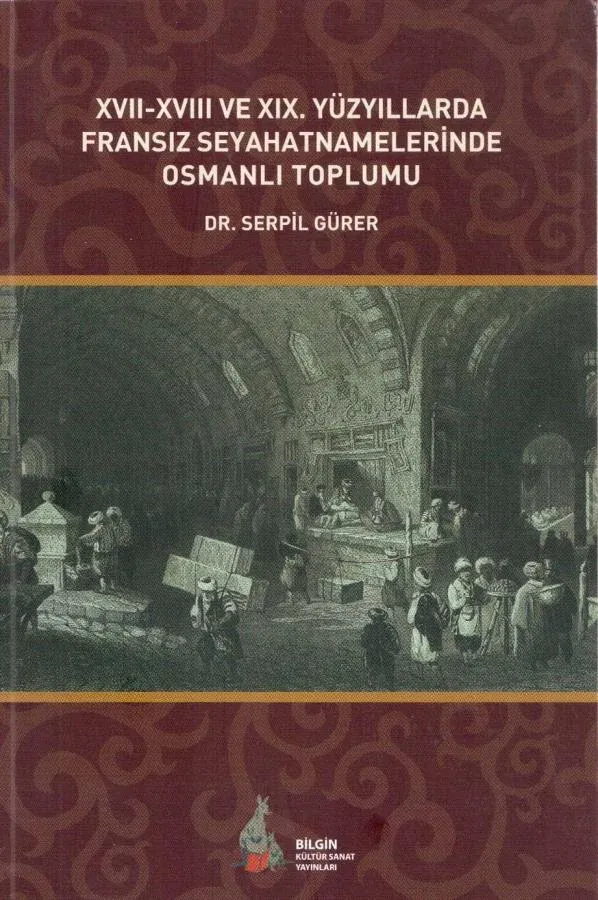

French Travelogues in the 17th, 18th and 19th Centuries Ottoman Society Xvıı-Xvııı Ve Xıx. Yüzyıllarda Fransız Seyahatname Osmanlı Toplumu
This study by Dr. Serpil Gürer examines the travelogues of French travelers from various professional groups who visited the Ottoman Empire during the 16th, 16th, and 19th centuries, a crucial period for the Ottoman Empire. It examines how Ottoman society was shaped and how images were formed within the framework of various social groups. During these periods, various changes occurred in these images in response to social and political events. During these centuries, travelers sought to gain a deeper understanding of the Ottoman Empire and society, particularly the Turks. However, starting with the Crusades, the images they formed, shaped by the French perspectives and prejudices, became indelibly ingrained in the French mind, and the Turks remained forever the "other."
French travelers, so interested in the Turks, paid little attention to the non-Muslim peoples living in Ottoman lands. They confined themselves to providing superficial information about them. In line with the social and political events of the period, French travelers sometimes felt close to Armenians and, in other periods, to Greeks. In other words, the "other" that French travelers specifically observed in Ottoman lands was the Turks. Therefore, the stereotypical images and scenes encountered in these travelers' travelogues generally pertain to the Turks.
This study by Dr. Serpil Gürer examines the travelogues of French travelers from various professional groups who visited the Ottoman Empire during the 16th, 16th, and 19th centuries, a crucial period for the Ottoman Empire. It examines how Ottoman society was shaped and how images were formed within the framework of various social groups. During these periods, various changes occurred in these images in response to social and political events. During these centuries, travelers sought to gain a deeper understanding of the Ottoman Empire and society, particularly the Turks. However, starting with the Crusades, the images they formed, shaped by the French perspectives and prejudices, became indelibly ingrained in the French mind, and the Turks remained forever the "other."
French travelers, so interested in the Turks, paid little attention to the non-Muslim peoples living in Ottoman lands. They confined themselves to providing superficial information about them. In line with the social and political events of the period, French travelers sometimes felt close to Armenians and, in other periods, to Greeks. In other words, the "other" that French travelers specifically observed in Ottoman lands was the Turks. Therefore, the stereotypical images and scenes encountered in these travelers' travelogues generally pertain to the Turks.