
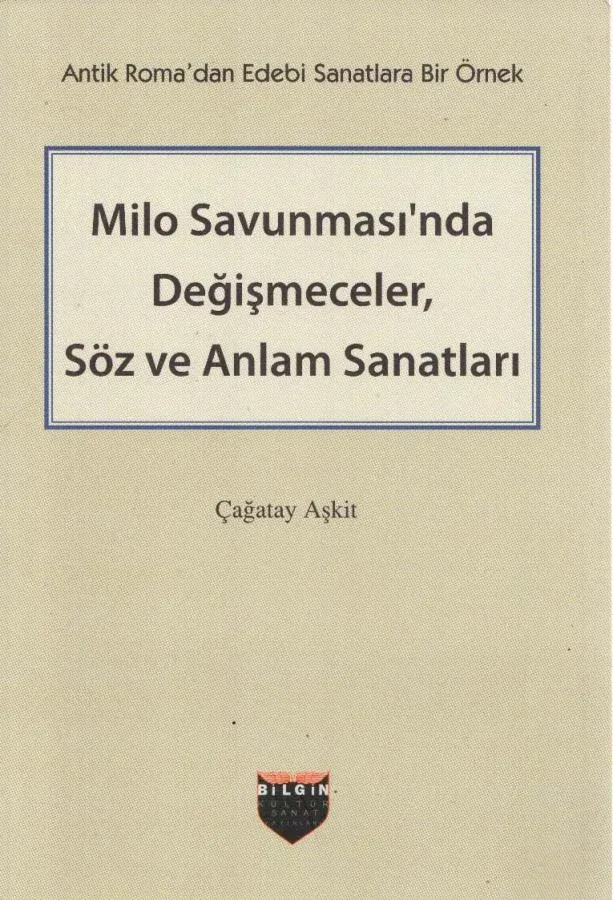

Figures of Speech and Meaning in Milo's Defense Milo Savunmasında Değişmeceler Söz Ve Anlam Sanatları
In early April 52 BC, Marcus Tullius Cicero defended his political ally and close friend Titus Annius Milo in the Forum, where he was tried for the murder of his rival and enemy, P. Clodius. The outcome of the trial, which the public eagerly awaited, proved unfavorable to the defense; the case was lost, and Mio was exiled. In Cicero's words, even the renowned Greek orators Demosthenes and Lysias could not have saved Milo under the circumstances of the time.
His speech was held up as a model for centuries and considered one of his finest speeches. The literary arts in Cicero's reorganized speech have gone beyond beautifying the speech and have become tools of proof. This study, which attempts to examine the figures of speech, figures of speech and semantics in the speech in terms of their functions not only in the sections they occur in but also in the speech as a whole, also aims to bring together the interpretations made on literary arts in the Ancient Age from Aristotle to Quintilianus with the readers.
İÖ 52 yılı Nisan ayı başında,Marcus Tullius Cicero,Forum'da siyasi müttefiki ve yakın dostu Titus Annius Milo'yu,rakibi ve düşmanı P.Clodius'u öldürmekle yargılandığı mahkemede savunur.Halkın da merakla sonucunu beklediği duruşmada koşullar savunmanın aleyhinedir,dava kaybedilir ve Mio sürgüne gönderilir.Cicero'nun deyimiyle,ünlü Yunan hatipler Demosthenes ve Lysias'ın bile o günkü koşullar altında Milo'yu kurtarmaları mümkün değildir.
Söylevi,yüzyıllar boyu örnek alınmış,en güzel konuşmalarından biri olarak değerlendirilmiştir. Cicero'nun yeniden düzenlediği söylevinde yer alan edebi sanatlar,konuşmayı güzelleştirmenin ötesine geçip,birer kanıtlama aracına dönüşmüşlerdir.Söylevdeki,değişmeceleri,söz ve anlam sanatlarını,yalnızca geçtikleri bölümlerdeki değil,konuşmanın bütünündeki işlevleri bakımından da inceleme çabasında olan bu çalışma,Aristoteles'ten Quintilianus'a Eskiçağda edebi sanatlar üzerine yapılan yorumları da okuyucularla buluşturmayı hedeflemiştir.
In early April 52 BC, Marcus Tullius Cicero defended his political ally and close friend Titus Annius Milo in the Forum, where he was tried for the murder of his rival and enemy, P. Clodius. The outcome of the trial, which the public eagerly awaited, proved unfavorable to the defense; the case was lost, and Mio was exiled. In Cicero's words, even the renowned Greek orators Demosthenes and Lysias could not have saved Milo under the circumstances of the time.
His speech was held up as a model for centuries and considered one of his finest speeches. The literary arts in Cicero's reorganized speech have gone beyond beautifying the speech and have become tools of proof. This study, which attempts to examine the figures of speech, figures of speech and semantics in the speech in terms of their functions not only in the sections they occur in but also in the speech as a whole, also aims to bring together the interpretations made on literary arts in the Ancient Age from Aristotle to Quintilianus with the readers.
İÖ 52 yılı Nisan ayı başında,Marcus Tullius Cicero,Forum'da siyasi müttefiki ve yakın dostu Titus Annius Milo'yu,rakibi ve düşmanı P.Clodius'u öldürmekle yargılandığı mahkemede savunur.Halkın da merakla sonucunu beklediği duruşmada koşullar savunmanın aleyhinedir,dava kaybedilir ve Mio sürgüne gönderilir.Cicero'nun deyimiyle,ünlü Yunan hatipler Demosthenes ve Lysias'ın bile o günkü koşullar altında Milo'yu kurtarmaları mümkün değildir.
Söylevi,yüzyıllar boyu örnek alınmış,en güzel konuşmalarından biri olarak değerlendirilmiştir. Cicero'nun yeniden düzenlediği söylevinde yer alan edebi sanatlar,konuşmayı güzelleştirmenin ötesine geçip,birer kanıtlama aracına dönüşmüşlerdir.Söylevdeki,değişmeceleri,söz ve anlam sanatlarını,yalnızca geçtikleri bölümlerdeki değil,konuşmanın bütünündeki işlevleri bakımından da inceleme çabasında olan bu çalışma,Aristoteles'ten Quintilianus'a Eskiçağda edebi sanatlar üzerine yapılan yorumları da okuyucularla buluşturmayı hedeflemiştir.