
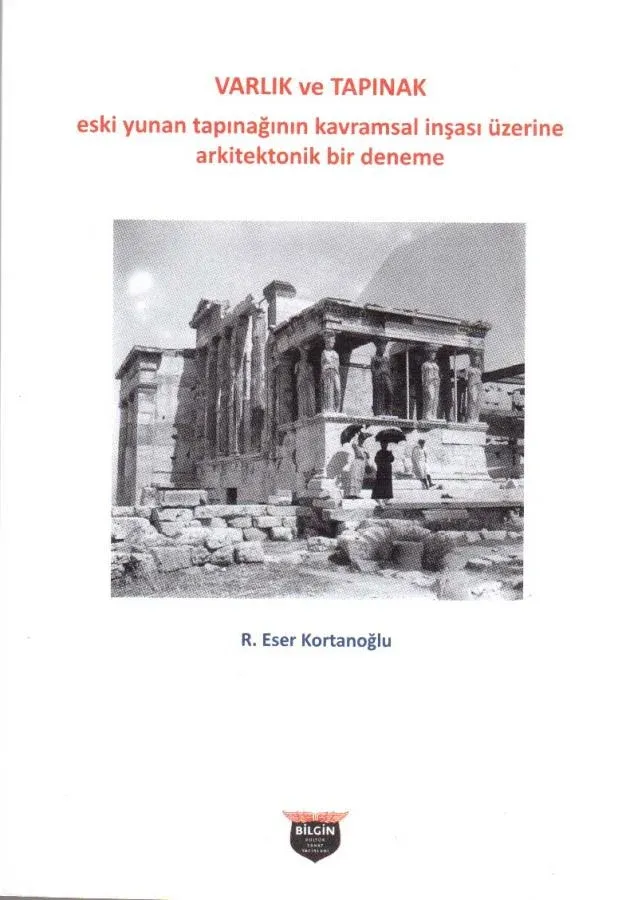

Being and the Temple - An Architectonic Essay on the Conceptual Construction of the Ancient Greek Temple Varlık ve Tapınak - Eski Yunan Tapınağının Kavramsal İnşası Üzerine Arkitektonik Bir Deneme
During my archaeological research, I observed that many "sharp statements," whose credibility was unquestioned and appeared universally "scientific," were actually based on rather intuitive, romantic, and arbitrary notions. In the Western discipline of cultural history and archaeology, particularly in the 19th and first half of the 20th centuries, I "felt" that certain narrative schemes were accepted as truth because a "structure" wanted them to be so, and that this episteme, with its terminology modernized, has been cyclically repeated until today. I say "felt" because these concepts, repeated for so long, now occupy a position in the unconscious rather than the mind. I call such intuitive-arbitrary narratives (which, in their underlying layers, constantly generate discourse or solve problems regarding the order called the cosmos) the "Classical Paradigm." The Classical Paradigm is based on a socio-cultural form that has gained visibility and has been continuously developed, particularly since the eighth century BC. In this study, I wanted to touch upon the existential plane, discourses, and traces of the “thing” I call the classical paradigm through “Ancient Greek Religious Architecture.”
İçindekiler
Önsöz ..............................................................................v
Bölüm 1:
Eski Yunan Tapınağının İnşa Evreleri: Konstrüksiyon, de-
Konstrüksiyon, re-Konstrüksiyon .....................................1
Bölüm 2:
Eski Yunan Dinsel Mimarisinde Klasik Modelin
Oluşumu ve Geçiş Yapıları ..............................................57
- Mimari a: Plan Şemaları ..............................................60
- Mimari b: Yapısal ve Oransal Nitelikler ........................80
- Görsel Şemalar: Alınlık Heykeltraşisi, Kompozisyon ve
İleti şim ..........................................................................84
- Meti nsel Şemalar: Dil ve Anlam ...................................90
Bölüm 3:
Eski Yunan Tapınak Mimarisinde İçkin İstikrarsızlık .......97
Bölüm 4:
Model-Kopya- Model Döngüsünde Kyklosun Uzamı ...... 135
Bibliyografya ............................................................... 176
Levhalar Listesi ............................................................ 195
Levhalar ...................................................................... 199
During my archaeological research, I observed that many "sharp statements," whose credibility was unquestioned and appeared universally "scientific," were actually based on rather intuitive, romantic, and arbitrary notions. In the Western discipline of cultural history and archaeology, particularly in the 19th and first half of the 20th centuries, I "felt" that certain narrative schemes were accepted as truth because a "structure" wanted them to be so, and that this episteme, with its terminology modernized, has been cyclically repeated until today. I say "felt" because these concepts, repeated for so long, now occupy a position in the unconscious rather than the mind. I call such intuitive-arbitrary narratives (which, in their underlying layers, constantly generate discourse or solve problems regarding the order called the cosmos) the "Classical Paradigm." The Classical Paradigm is based on a socio-cultural form that has gained visibility and has been continuously developed, particularly since the eighth century BC. In this study, I wanted to touch upon the existential plane, discourses, and traces of the “thing” I call the classical paradigm through “Ancient Greek Religious Architecture.”
İçindekiler
Önsöz ..............................................................................v
Bölüm 1:
Eski Yunan Tapınağının İnşa Evreleri: Konstrüksiyon, de-
Konstrüksiyon, re-Konstrüksiyon .....................................1
Bölüm 2:
Eski Yunan Dinsel Mimarisinde Klasik Modelin
Oluşumu ve Geçiş Yapıları ..............................................57
- Mimari a: Plan Şemaları ..............................................60
- Mimari b: Yapısal ve Oransal Nitelikler ........................80
- Görsel Şemalar: Alınlık Heykeltraşisi, Kompozisyon ve
İleti şim ..........................................................................84
- Meti nsel Şemalar: Dil ve Anlam ...................................90
Bölüm 3:
Eski Yunan Tapınak Mimarisinde İçkin İstikrarsızlık .......97
Bölüm 4:
Model-Kopya- Model Döngüsünde Kyklosun Uzamı ...... 135
Bibliyografya ............................................................... 176
Levhalar Listesi ............................................................ 195
Levhalar ...................................................................... 199